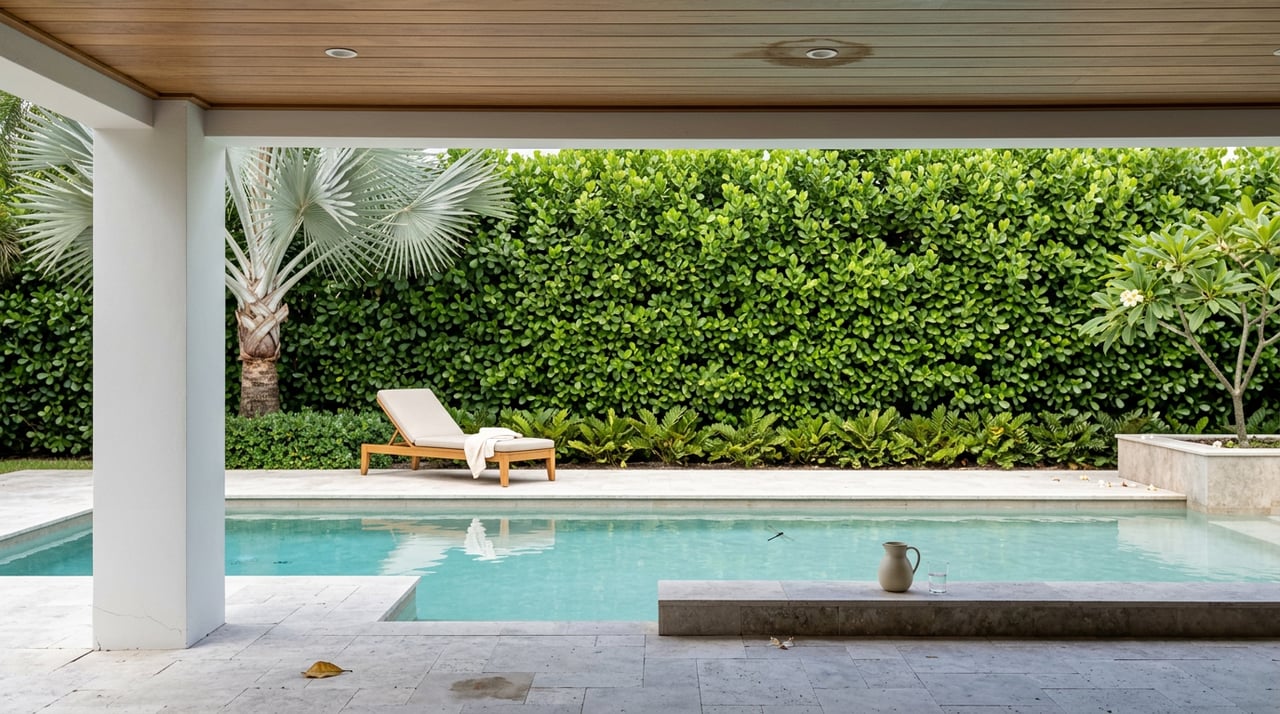
The Coral Ridge Price Puzzle: What the Median Doesn't Tell You About Buying Next to the Galleria
July 23, 2026
July 23, 2026
Buyers comparing Fort Lauderdale neighborhoods usually start with the median. In Coral Ridge, the median is misleading in an unusually specific way. Not because the number is wrong, but because the most consequential fact about the neighborhood right now sits across East Sunrise Boulevard, on a 31.5-acre parcel that the standard portal filters cannot see.
The Galleria site sold in 2024 for a reported $73 million. What happens to it over the next several years will shape resale value, comparable sales patterns, and buyer psychology throughout Coral Ridge. The mechanism that got it there is the interesting part, and it changes how a prepared buyer should read every listing on the north side of Sunrise.
Coral Ridge is a slow market in the summer of 2026. Median list prices sit in the $1.6M to $1.79M range depending on which slice of the neighborhood is being counted, with premium waterfront well above that. Days on market run around 105 to 159 for the broader neighborhood, and closer to 142 days with roughly eight months of supply inside the Coral Ridge Country Club submarket, where the recent median sale is closer to $2.4M at $734 per square foot. Homes are closing 5% to 7% below list.
Read those numbers together and you get a buyer's market. Read them next to the Galleria file at City Hall and you get something more interesting: a buyer's market with a supply question hanging over it that most buyers do not yet know how to price.
The buyer of the Galleria was not a mall operator. A joint venture led by Miami-based GFO Investments, founded by Russell Galbut, and Fort Lauderdale-based InSite Group, led by Ben Shmul, acquired the 31.5-acre property on East Sunrise Boulevard for a reported $73 million and, in August 2025, applied to the City of Fort Lauderdale for a development permit. Atlas Hill Real Estate and Prime Finance are also part of the ownership group.
The original filing was made under Florida's Live Local Act. That is the part of the story worth slowing down on, because it is what changes the calculus for a Coral Ridge buyer. The Live Local Act is a state law that can fast-track a project when it meets certain requirements, like offering affordable housing, but the law also says the project does not need public input or city leaders to sign off on it. To qualify, at least 40 percent of units must be rented to households earning at or below 120 percent of the area median income.
Translation for a buyer three blocks away: the usual assumption that neighbors, associations, and the city commission will meaningfully shape what gets built next door is weaker here than in most Fort Lauderdale submarkets. Mayor Dean Trantalis has said as much publicly, describing the statute as tying the city's hands on neighbor input.
The scale on the table has moved during the review. Early filings described roughly 3,200 rental units; more recent conversations have shifted toward roughly 80% of the units being condos. FAA determinations were issued on May 13, 2026 for eight proposed high-rise towers, each rising 342 feet above ground level, or approximately 350 feet above sea level. That filing does not authorize construction. It does confirm the developer is still working from a footprint of eight buildings in the same height class as the original concept.
One anchor tenant is already committed. Wayfair announced in April 2026 that it will open its first large-format Florida store at Galleria Fort Lauderdale, scheduled to open in late 2027 and spanning approximately 94,000 square feet across two levels. Macy's, Dillard's, and the Apple Store continue to operate on the site during redevelopment planning.
The reason the median misleads in Coral Ridge is that a single number is being asked to describe two very different products.
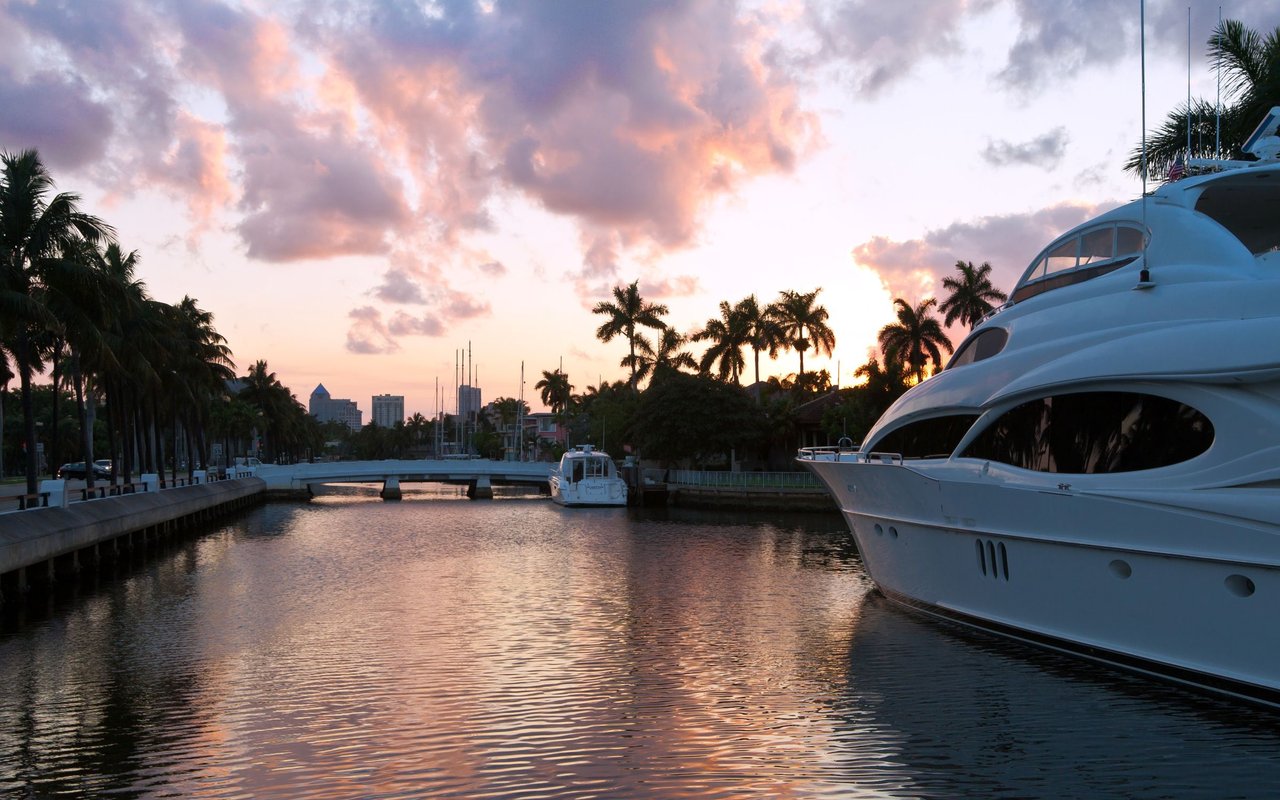
The first is deep-water waterfront: seawall, dock, canal frontage, ocean access route, bridge clearance. Value here is anchored by the lot. The house on it can be renovated, replaced, or torn down; the water access cannot be replicated. That is why waterfront listings tend to spend less time at a discount even when neighborhood-wide days on market drift higher. A buyer paying a premium for a Middle River Drive lot or a canal parcel is paying for something that a 342-foot tower two miles away does not really compete with.
The second is dry-lot single-family and condo inventory closer to Sunrise, Federal Highway, and the Galleria itself. That inventory is where the density question actually lands. If the redevelopment moves forward at anything close to the originally filed unit count, the comparable-sales set for a three-bedroom ranch a few blocks off Sunrise starts to include a very different kind of housing product within walking distance. The current 5% to 7% list-to-sale discount already reflects a buyer market. The question is whether it also fully prices the Galleria overhang, and the honest answer is that no one knows yet.
That uncertainty is a negotiating input, not a reason to walk. It is why reading each home against real comparable sales, rather than the headline neighborhood trend, matters more here than in a tighter market.
Approvals for the Galleria are moving in phases, not in a single vote. The October 2025 town hall marked the beginning of a multi-step process continuing into 2026, with next phases including a revised development plan incorporating Live Local Act criteria for affordable housing, traffic management, and public infrastructure; city planning and commission review followed by additional community hearings; and community benefit agreements outlining binding commitments for affordable units, open space, and local hiring, with construction rolling out in phases over several years if approved.
For a buyer, the practical read is:
A buyer who plans to hold through all three phases is buying a different asset than a buyer who plans to resell in three years.
The friction that catches Coral Ridge buyers off guard is not price. It is the sequence of questions that only surface once a specific property is under contract:
None of these are Coral Ridge secrets. They are the specific places where a national buyer's playbook breaks against a South Florida transaction, and where a local read on condition, comps, and timing pays for itself.
Is Coral Ridge a good market for a first-time Fort Lauderdale buyer in 2026? It can be, but "first-time in Coral Ridge" usually means a dry-lot single-family home or a condo rather than a waterfront estate. In that segment, the current buyer's market gives room to negotiate on price and repairs. The Galleria question matters more here than in the waterfront segment, so a five-plus-year hold changes the math.
Will the Galleria redevelopment lower Coral Ridge home values? That is the wrong framing. It will change which comparable sales matter and which features hold value. Waterfront and preferred lots are anchored by scarcity. Dry-lot inventory closest to East Sunrise Boulevard is the segment where the effect, positive or negative, will show up first.
What is the Live Local Act, and why does it come up in Coral Ridge conversations? It is the Florida statute the Galleria developers used to file their original proposal. It fast-tracks qualifying mixed-use housing projects and narrows the usual municipal review, which is why neighborhood associations near the site have organized around it rather than a specific site plan.
The interesting work in this neighborhood right now is reading each property against real comparable sales, understanding what a specific lot is anchored to, and pricing the Galleria timeline into a hold period that fits the buyer, not the headline. That is the conversation Waltzer Realty is set up to have with you before you write an offer.
Get a Free Home Valuation to start with a clear read on where your target price sits against the Coral Ridge market as it stands today.

Many people are still wondering whether or not real estate is one of the best investment strategies.

Which strategies will prevail over the next decade? Early adopters or taking relationships seriously?

Here are 12 ways for real estate investors and Realtors to bring in more leads.

“Businesslike” investing suggests a less emotional, better organized, well thought out approach.
Guided by integrity, expertise, and exceptional service, our team is dedicated to making every real estate journey seamless, rewarding, and tailored to your unique goals. Whether you're buying, selling, or investing, we're here to help every step of the way.
Waltzer Realty
2425 E Commercial Blvd #100 Fort Lauderdale, FL 33308